Serving consistently cold draft beer is not a luxury—it is an expectation. For bars, breweries, restaurants, and taprooms using long-draw draft systems, glycol-cooled draft beer systems are the gold standard for maintaining pour quality from keg to faucet.
In this guide, you’ll learn what a glycol draft beer system is, how it works, and step-by-step maintenance tips to keep your beer pouring cold, clear, and foam-free every time.
Why Cold Draft Beer Matters
Even as craft beer styles evolve and serving temperatures vary, one thing remains constant:
Warm beer equals unhappy customers.
A poorly maintained draft system leads to:
- Excessive foam
- Flat or inconsistent pours
- Wasted beer
- Customer complaints
A properly maintained glycol cooling system solves all of these problems by keeping beer at a stable temperature from the cooler to the tap—no matter the distance.
Cold, consistent beer improves customer retention and profitability.
What Is a Glycol-Cooled Draft Beer System?
A glycol-cooled draft beer system is designed for long-draw applications, typically:
- Systems longer than 15 feet
- Bars with 6 or more taps
- Remote walk-in coolers or keg rooms
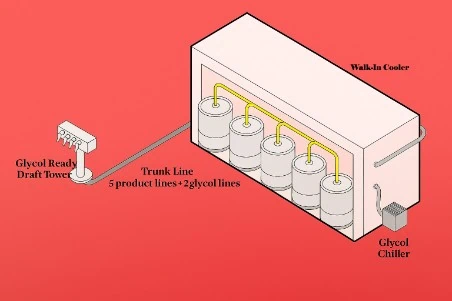
Unlike air-cooled systems, glycol systems actively circulate chilled fluid alongside beer lines, ensuring temperature consistency throughout the entire run.
How a Glycol Beer System Works
Here’s a simple breakdown of the components and flow:
- Glycol Power Pack (Chiller)
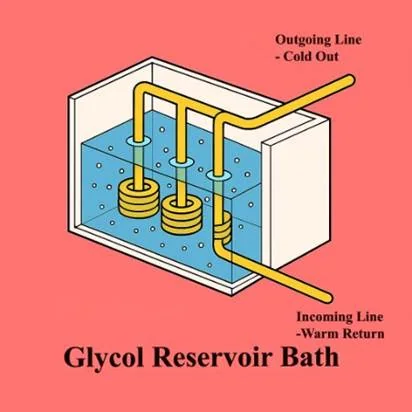
Cools a glycol-water mixture to sub-freezing temperatures. - Glycol Bath
A mix of food-grade propylene glycol and water that transfers cold efficiently. - Trunk Line
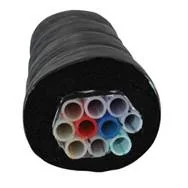
Insulated bundle that contains:- Beer lines
- Supply and return glycol lines
- Draft Tower
Glycol is looped through copper tubing at the shanks to keep faucets cold.
The glycol continuously circulates, preventing heat gain and foam issues—even in warm environments.
Recommended Glycol Temperature Settings
Setting the correct temperature is critical.
- Alcoholic beverages:
✅ Set chiller between 26–28°F - Non-alcoholic beverages:
✅ Slightly warmer settings to prevent freezing
Even if the chiller reads correctly, always confirm the beer temperature at the faucet—long runs can create temperature differentials.
Proper Glycol Mixture Ratio
An incorrect glycol concentration can cause freezing or poor cooling performance.
Best practice:
- 35–40% glycol
- 60–65% water
Maintenance Tips:
- Inspect mixture every few months
- Test freezing point annually using:
- Refractometer
- Hydrometer
Glycol Draft Beer System Maintenance Checklist
Routine maintenance prevents breakdowns and expensive repairs. Use this checklist as part of your regular service schedule.
✅ 1. Keep the Glycol Bath Covered
An open bath allows condensation and dilution, weakening cooling efficiency over time.
✅ 2. Monitor Chiller Performance
- Listen for unusual sounds
- Check for excess heat
- Ensure stable temperature readings
🔧 If something sounds or feels off, call a draft technician immediately.
✅ 3. Inspect Glycol Pumps
Pumps should run smoothly and quietly. Red flags include:
- Grinding noises
- Vibration
- Leaking connections
✅ 4. Clean the Condenser Regularly
- Inspect every 3–5 weeks
- Clean dust and debris from condenser fins
- Use a stiff brush or vacuum
A dirty condenser = overheating and system failure.
✅ 5. Check Trunk Line Integrity
Well-installed trunk lines are durable, but over time you should inspect for:
- Insulation damage
- Ice buildup
- Glycol leaks
Common Symptoms of Glycol System Problems
If you notice any of the following, glycol maintenance should be your first check:
- Foamy beer
- Inconsistent pour temperature
- Warm draft tower
- Excess beer waste
Routine inspections prevent most of these issues before they affect customers.
Final Thoughts: Preventative Maintenance Pays Off
Your glycol-cooled draft beer system works hard every day—regular maintenance keeps it efficient, reliable, and profitable.
✅ Cold beer
✅ Better pours
✅ Less waste
✅ Happier customers
If problems persist after troubleshooting, consult a professional draft system technician to avoid long-term damage.