A properly balanced CO2 system is the key to serving perfect draft beer. Whether you’re running a kegerator at home or managing a commercial setup, understanding CO2 pressure, tank usage, and setup basics ensures consistent pours, ideal carbonation, and great taste.
This guide answers the most common CO2 questions and includes practical tips to optimize your draft beer system.
What Does CO2 Do in a Draft Beer System?
CO2 (carbon dioxide) is the driving force behind your draft beer setup. It:
- Pushes beer from the keg to the tap
- Maintains carbonation levels
- Ensures smooth, consistent pours
Without proper CO2 pressure, your beer can taste flat, overly foamy, or unbalanced.
Draft Beer CO2 Pressure Chart
Use this quick chart as a baseline for setting your regulator:
| Condition | Recommended Adjustment |
| Standard beer (most styles) | 10–15 PSI |
| Temperature increase | +1 PSI per +2°F |
| Temperature decrease | -1 PSI per -2°F |
| Higher altitude | +1 PSI per 2,000 ft |
| Highly carbonated beers (wheat, Belgian, sour) | 12–18 PSI |
✅ Ideal beer temperature: 38°F
✅ Ideal pour rate: 1 pint in ~8 seconds
Proper balance between pressure and temperature is essential for optimal results.
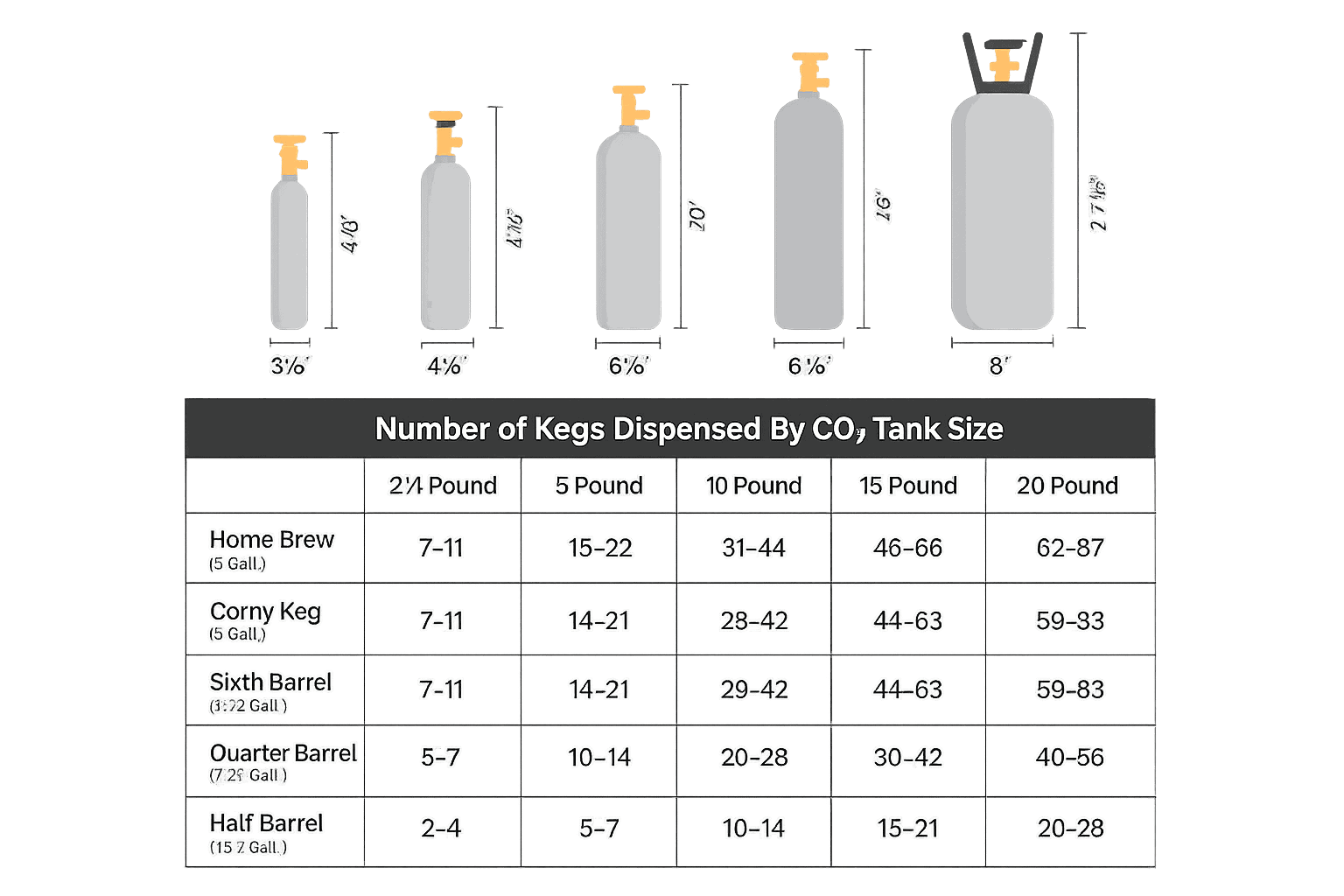
How Many Kegs Can a CO2 Tank Dispense?
CO2 tank size directly impacts how many kegs you can pour:
- 5 lb CO2 tank: 6–8 full kegs
- 10 lb CO2 tank: 10–13 full kegs
Actual usage may vary depending on:
- Carbonation level
- Draft system efficiency
- Frequency of use
A well-maintained system ensures longer tank life and fewer refills.
Where to Fill a CO2 Tank
Common refill locations include:
- Welding supply stores
- Fire extinguisher service centers
- Homebrew shops
- Draft beer retailers
⚠️ CO2 tanks must be DOT-certified and re-certified every 5 years for safety and compliance.
How to Check for CO2 Leaks
CO2 leaks reduce system efficiency and waste gas.
Warning signs:
- Hissing sounds
- Dropping PSI levels
Soapy Water Test:
- Mix water with dish soap
- Apply to all connections
- Look for bubbles (indicates a leak)
Fixing leaks:
- Tighten fittings
- Replace damaged washers or seals
Regular leak checks help maintain stable pressure and consistent pours.
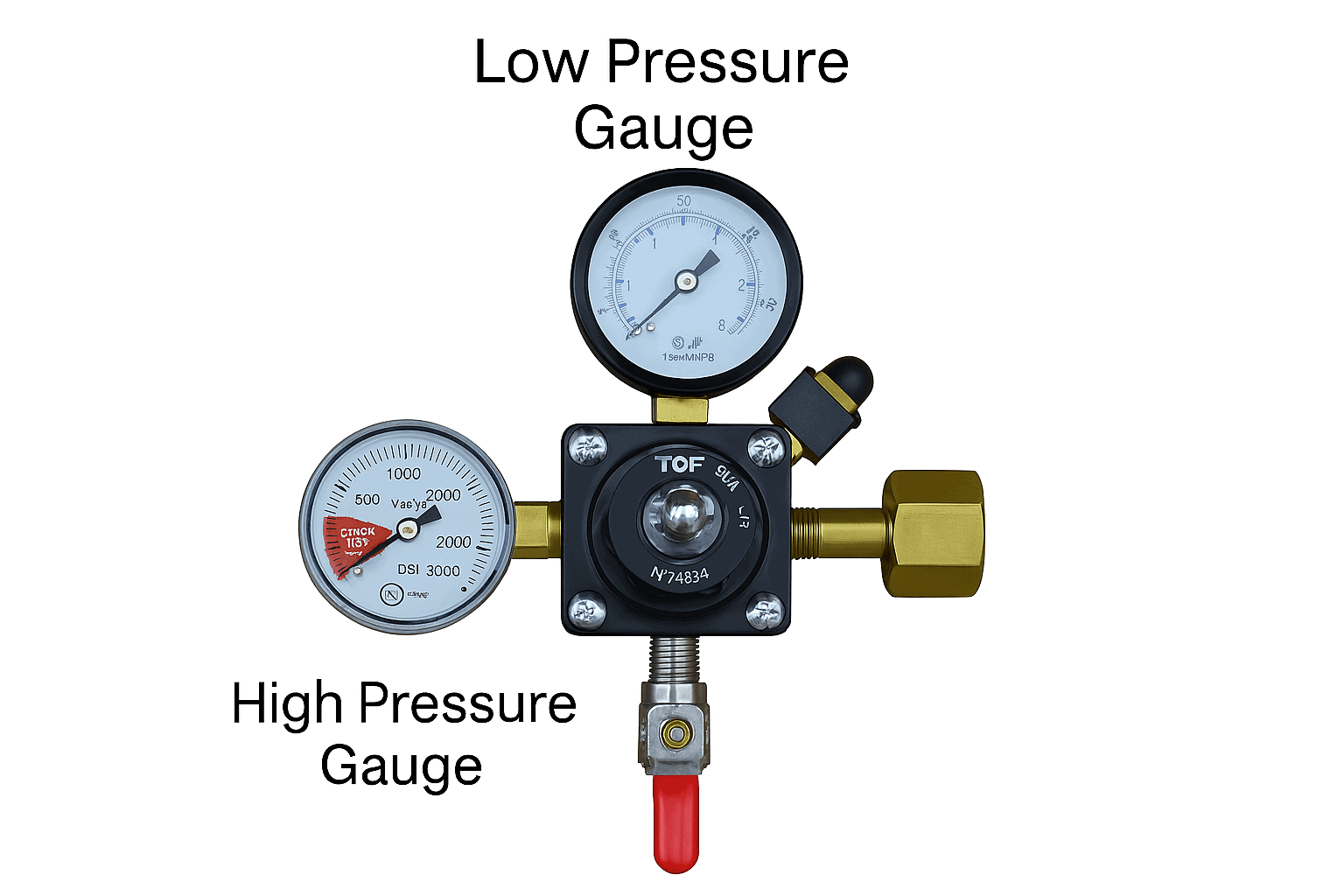
How to Read a CO2 Regulator
A dual-gauge regulator provides two key readings:
- Low-pressure gauge (0–60 PSI):
Controls serving pressure - High-pressure gauge (0–3000 PSI):
Shows remaining gas in the tank
Monitoring both gauges helps prevent unexpected runouts and troubleshooting issues.
How to Tell When Your CO2 Tank Is Empty
Signs your CO2 tank is running low:
- Pressure gauge drops suddenly
- Tank feels unusually light
- Beer becomes flat or under-carbonated
💡 Pro tip: Weigh your tank when full and track usage over time for accuracy.
Should the CO2 Tank Be Inside or Outside the Kegerator?
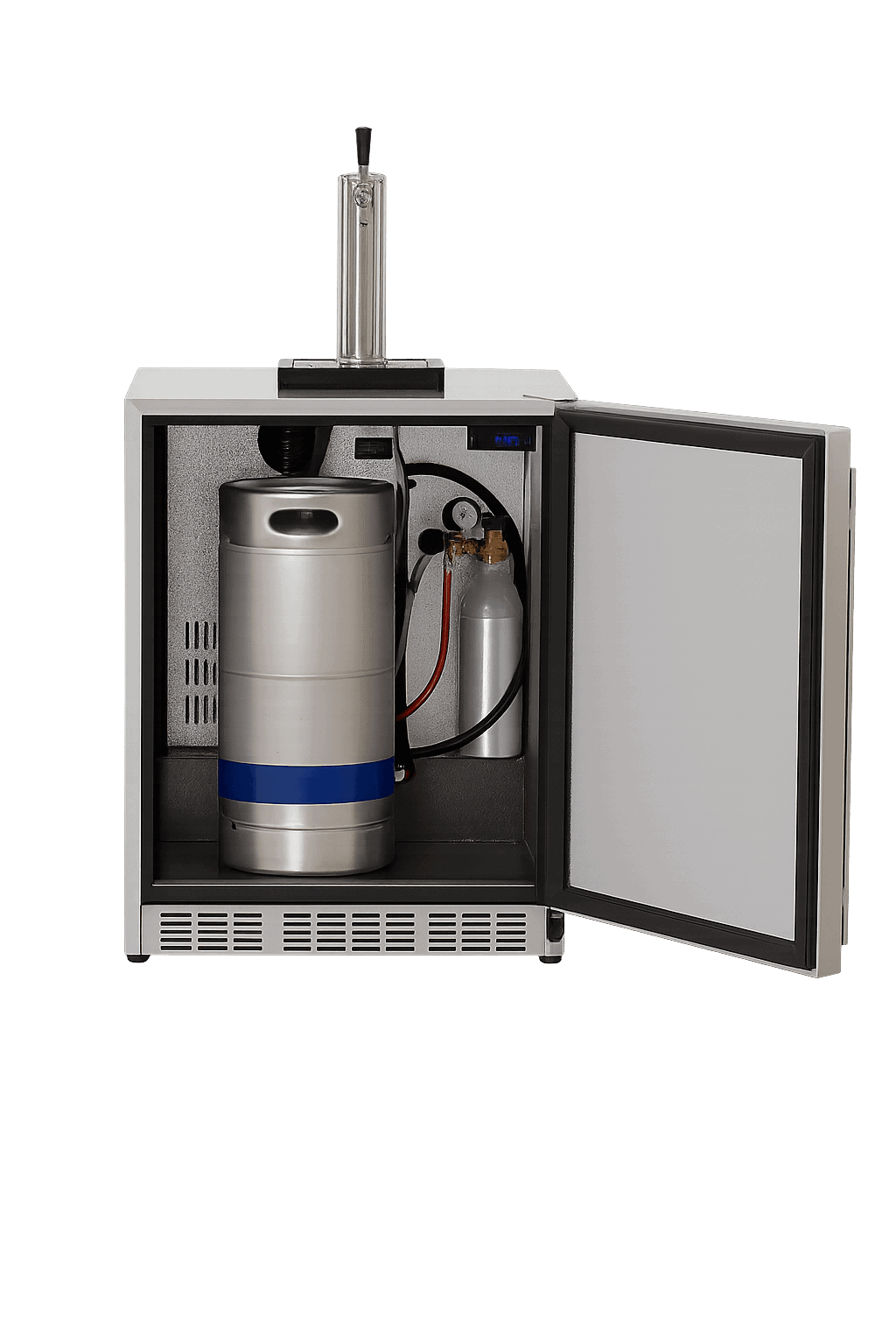
✅ Best option: Keep the tank inside the kegerator (if space allows)
Benefits:
- Better CO2 efficiency
- More stable carbonation
Safety Tips:
- Always keep the tank upright
- Avoid exposure to heat
- Secure with a bracket or holder
Stable temperatures improve overall performance.
How to Set Up a CO2 Tank (Step-by-Step)
Equipment Needed:
- CO2 tank
- Regulator
- Air Line
- Keg Coupler
- Wrench
Setup Instructions:
- Connect the air line
Attach from regulator to keg coupler - Attach regulator to CO2 tank
Tighten securely with a wrench - Connect coupler to keg
Insert and lock into place - Turn on the CO2 tank
Open valve and set PSI
✅ Ensure all connections are tight to prevent leaks and maintain pressure.
Final Tips for Perfect Draft Beer
- Keep your system balanced (temperature + pressure)
- Check for leaks regularly
- Use the correct PSI for each beer style
- Monitor your CO2 levels to avoid interruptions
With the proper setup, your draft system will deliver smooth, consistent, and great-tasting beer every time.